
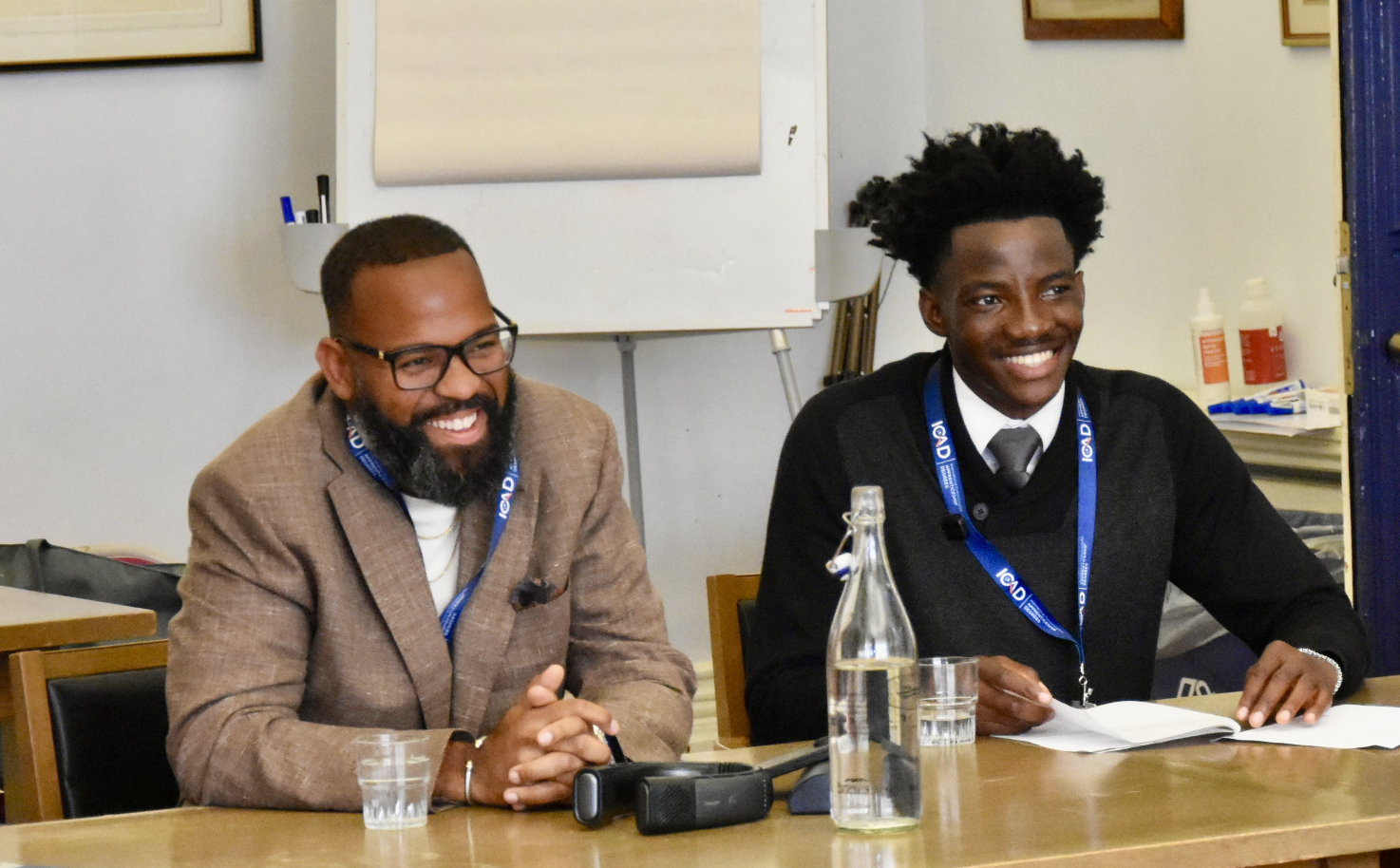

Iyioluwa Adesan
Founder and CEO, Apprentis
I went to ICAD 2026 with arguments I already believed about workforce readiness. What I wanted was not new ideas, but the chance to place them in front of people approaching apprenticeship systems from very different positions, and see what survived.
One observation in particular was difficult to ignore, because I had seen the same setting a year earlier. The room had changed. What changed in that room helped clarify both what I still believe about workforce readiness, and what I now think the harder problem is.
Two rooms, one year apart
What changed between two rooms
At ICAD 2025, I participated as a named panellist. Many of the questions I encountered were still definitional. What is a degree apprenticeship? How does it differ from a standard apprenticeship? How should we think about the model? Why does it matter?
There is nothing wrong with those questions. Every developing field has to establish a shared language before it can move much further. But those questions also tell you something about where a conversation sits.
A year later, I returned to ICAD to co-facilitate The On-Ramp Problem alongside Taikein Cooper of the Richmond Ed Fund. The session examined a more specific question: what would it take for public school systems to function as genuine, access-centred routes into Apprenticeship Degrees, rather than simply making young people aware that the pathway exists?
What struck me was that the room did not need much convincing that there was a difference between awareness and access. Participants were already describing interventions. They were talking about what they were building, where the pathway was breaking, the role of institutions and employers, and the conditions required to move people from knowing an opportunity exists to actually being able to navigate it.
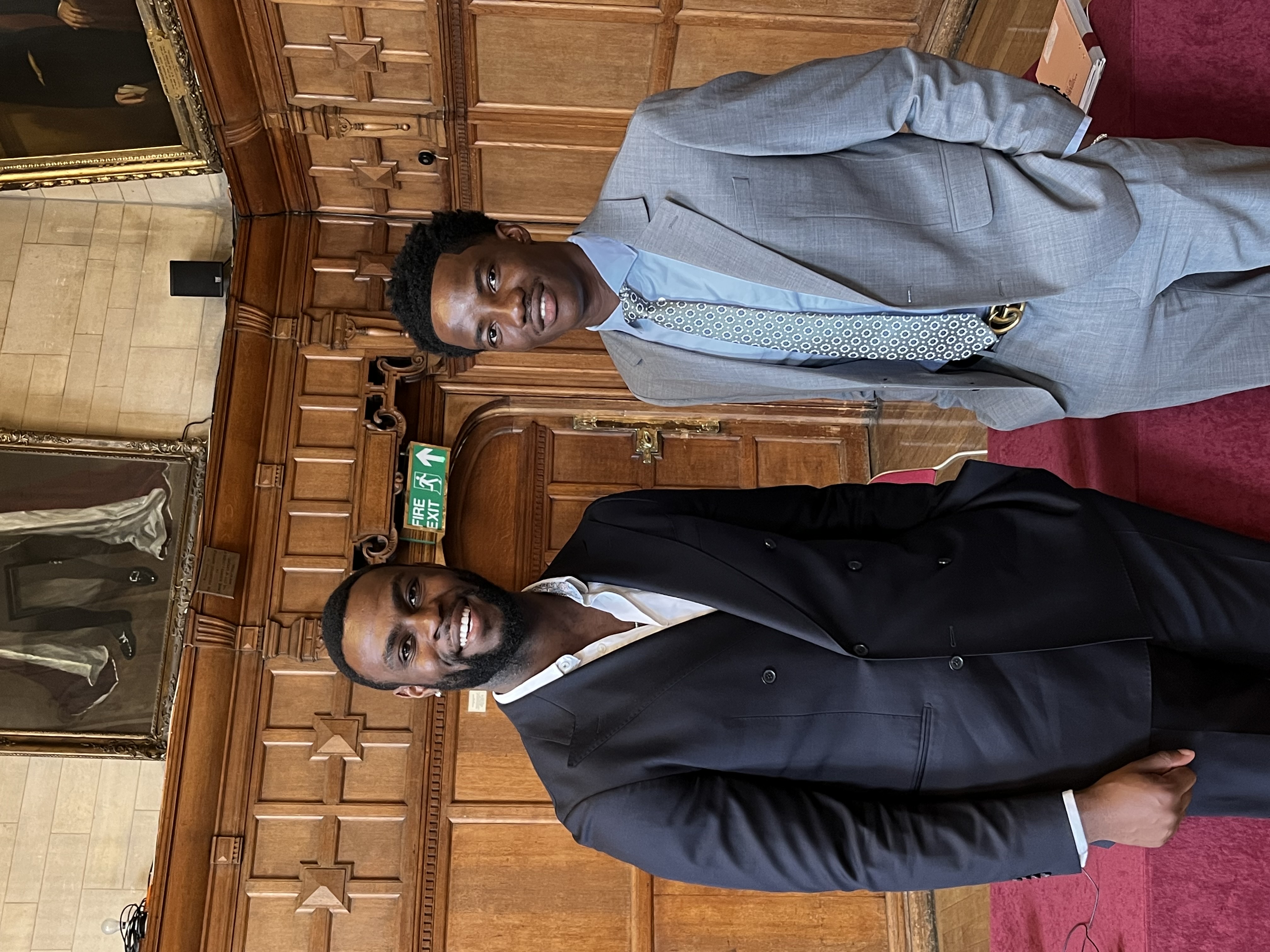
Taikein Cooper of the Richmond Ed Fund (left) with Iyioluwa Adesan (right), co-facilitators of The On-Ramp Problem at ICAD 2026, University of Oxford.
The questions had changed in kind, not simply in sophistication. A year earlier, many of the conversations I encountered were about what. This year, the room I facilitated was much more concerned with how.
I want to be careful not to overstate what that means. One room, one session and one convening are directional evidence, not proof of a field-wide shift. The people in each room were not a controlled sample, the contexts were different, and I occupied a different role in each year. But it was the clearest direct indication I have seen in this setting that the conversation is beginning to move from defining the pathway towards building the conditions around it.
That distinction matters, because it was exactly those conditions that The On-Ramp Problem was designed to examine.
The thesis
What the On-Ramp Problem was actually testing
The thesis behind the session was never that earlier awareness is worthless. The claim was narrower, and I think more defensible: earlier awareness, on its own, is not sufficient to produce equitable access.
Imagine that tomorrow every young person learns about Apprenticeship Degrees earlier. That would be progress. But then what? Who helps them understand the pathway? Who helps them decide whether it is appropriate for them? Does the school have staff who understand how the route works? Can it connect awareness to actual employers and opportunities? Does somebody know how to support the application process? What happens when one institution has those capabilities and another does not?
If earlier awareness is introduced without the infrastructure required to act on it, the gap does not necessarily disappear. It can simply relocate. Students know the pathway exists earlier than they used to, but some are still filtered out at the same structural points, because the capacity around them has not changed.
One young person encounters awareness plus navigation, employer connectivity, and informed support. Another receives the information but is largely left to work out the rest. Both technically had "access" to awareness. They did not have the same ability to convert that awareness into opportunity.
What was useful about the discussion at the University of Oxford was that it did not overturn that hypothesis. It made the next problem clearer. The room was already thinking beyond awareness and into questions of infrastructure, institutional capability, employer engagement and pathway design. Once you move the conversation there, workforce readiness becomes much harder to locate entirely inside the individual.
The 2026 Apprenticeship Communication Gap Report
The evidence base behind why individual readiness alone was never the full picture.
What held up
So, what survived Oxford?
The central proposition did: readiness may not only be a quality of the individual.
We ask a great deal of the person entering work. Can they communicate professionally? Can they navigate an application? Do they understand workplace expectations? Are they confident enough? Can they adapt? Do they have the right skills? Those questions matter. Individual readiness matters.
But locating readiness entirely inside the individual creates a blind spot. A capable learner can still be surrounded by a school or education provider without the staff knowledge, capacity or employer relationships required to support the pathway. An apprentice can arrive ready to learn and be placed with a manager who has been assigned responsibility for them without being given the time, preparation or support required to fulfil it well. An employer can recruit successfully while leaving the expectations of professional life largely implicit, assuming a young person will simply work them out.
None of those conditions necessarily tells us anything about the potential of the individual. Yet the individual experiences their consequences. If readiness only lives inside the learner, institutional conditions risk becoming background noise. They are not background noise to the person living inside them. They are part of the environment in which that person's capability has to operate.
That part of the argument survived Oxford. But simply saying that readiness exists across multiple layers is no longer enough for me, because recognising that the system matters creates another problem.
The other side
The employer side of the same question
One of the questions I kept returning to throughout the convening was the reverse of one we ask regularly in early careers: we ask whether the apprentice is ready for the workplace. Is the workplace ready for the apprentice?
That question becomes practical very quickly. Is the manager supporting that person actually prepared to do so, or merely assigned to them? Are workplace expectations explicit, or are we relying on a new entrant to infer them? Is protected learning time genuinely protected when operational pressure increases?
These are readiness questions too, and employers are trying to answer them while the conditions around them rarely stay still. Funding changes. Policy changes. Compliance expectations move. Economic pressures alter what organisations can sustain. A programme can be well designed under one set of conditions and considerably harder to deliver under the next.
The specific architecture also changes across countries. Conversations at the University of Oxford with people working within different national systems were a useful reminder that principles may travel more easily than interventions do. Funding structures, institutional responsibilities and apprenticeship models differ substantially. There is no sensible copy-and-paste solution. But the underlying question travels surprisingly well: what conditions have to exist around somebody for a transition into work to succeed?
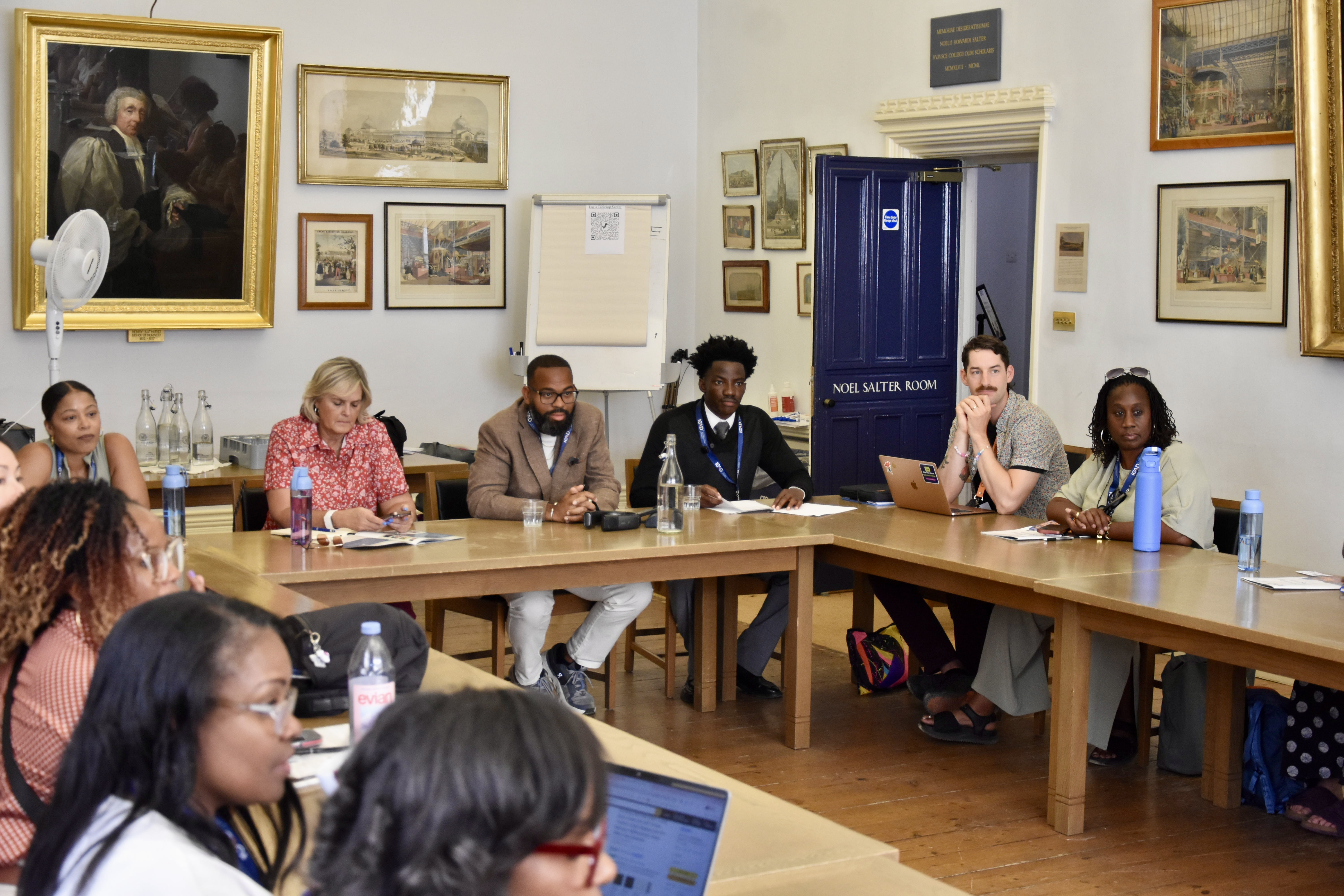
Delegates working through The On-Ramp Problem at ICAD 2026, University of Oxford.
That leads to the part of my thinking that changed most in Oxford.
The harder problem
The harder question is ownership
Before ICAD, I had been thinking a great deal about visibility. What readiness gaps could we identify earlier? What signals are currently hidden? What do education providers struggle to see? What do employers discover only after somebody has entered the workplace? When does a problem become visible?
Those questions still matter. But Oxford sharpened the standard I now apply to them: visibility is only useful if it changes a decision.
Imagine that a readiness gap becomes visible six months before somebody enters work. That sounds valuable. But then what? Who needs to see it? When do they need to see it? What decision should it change? Who has the authority to respond? What intervention is available? And how do we know whether that intervention changed the eventual outcome?
I have started thinking about that as a sequence:
Every link matters. A signal can exist and never reach the person capable of acting on it. The right person can receive it after the useful intervention window has already closed. They can receive it in time but have no authority to change anything. They can have authority but no defined intervention available. An intervention can happen without anybody knowing whether it improved the eventual transition.
Once you look at readiness this way, the problem stops being simply one of assessment. More information is not automatically better infrastructure. A more sophisticated dashboard does not automatically produce a better decision. A signal without an owner can become another dashboard. A diagnostic without an intervention can become another assessment. Shared responsibility without clear accountability can still leave the learner carrying the consequences.
I went in asking: what needs to be ready around the learner? I left asking: when the system can see that something is not ready, who is responsible for changing it?
Distributed, not diffuse
Readiness can be distributed. Accountability cannot be abstract.
Systems language creates its own danger. Once we recognise that learners, schools, colleges, universities, employers, intermediaries, policymakers and funders can all influence an outcome, it becomes very easy to say responsibility belongs to "the ecosystem." But ecosystems do not make interventions. People and institutions do. Someone still has to know: this is mine to respond to.
That does not mean one organisation should own the entire education-to-employment transition. It means distributed responsibility has to become specific accountability at particular points in that journey. Who owns preparation? Who owns the handoff between institutions? Who responds when a gap becomes visible? Where does one organisation's responsibility end and another's begin? What happens when responsibilities overlap? And what happens in the spaces where everyone has technically fulfilled their own obligation, but the transition itself still fails?
That is now the part of the workforce readiness problem I find most interesting, because a system can have good people, good programmes and good intentions and still produce poor transitions if the handoffs between them are badly designed. The person moving through that system experiences those handoffs whether the institutions acknowledge them or not.
The higher bar
What this changes for Apprentis
This has raised the standard I apply to what we are building at Apprentis. We use the term Workforce Readiness Intelligence to describe structured insight from across the transition between education and employment, insight that can help learners, education providers and employers understand readiness gaps before those gaps become failed transitions.
But Oxford clarified something important. If Workforce Readiness Intelligence only makes a problem visible, it has not gone far enough. The real test is whether that visibility changes what happens next. Can an education provider identify a readiness gap early enough to support somebody differently? Can an employer understand what needs to be in place before somebody arrives? Can a signal reach the person with the authority and capability to act? Can different organisations see enough of the same transition to coordinate around the person moving through it?
That is a much more demanding standard than simply measuring readiness. It should be. The technology is not the point. The point is whether the system can see early enough to make a better decision and act deliberately. If the first clear indication that something was wrong is that somebody failed to apply, dropped out, struggled significantly after entering work or left the pathway entirely, then in many cases the useful intervention window has already narrowed or closed.
The ambition should not be to become better at analysing failed transitions after the fact. It should be to make successful ones more deliberate beforehand. That is where I think Workforce Readiness Intelligence has to prove its value: not simply in answering where is the gap, but in helping organisations answer who needs to know, when they need to know it, what decision should change, and who owns the response.
The Apprentis Pilot Study 2026
Early evidence on turning visible readiness gaps into acted-on decisions.
Beyond one room
Testing the thinking beyond one room
ICAD also marked the beginning of The Systems Behind the Pathway, an Apprentis editorial series I have been developing to examine these questions with people who see different parts of the education-to-employment system.
The first conversations reinforced why I wanted to build the series. The same transition can look completely different depending on where somebody sits.
The purpose is not to use those conversations to prove an Apprentis thesis. It is to make the thesis harder to defend badly and easier to defend well. The value of a hypothesis is not that you can find people willing to agree with it. It is whether it becomes more useful after serious people have tried to break it. That work continues after Oxford.
Where this leaves me
What I am taking forward
I went to the University of Oxford asking what needs to be ready around the learner.
I left asking what happens once a readiness gap becomes visible. Who can see it? Who can change it? Who owns what happens next?
My own transition into employment worked. A degree apprenticeship changed the direction of my life. But too much of finding that opportunity depended on chance for me to be satisfied simply because the eventual outcome was successful.
Successful transitions into work should become designed outcomes rather than fortunate accidents.
Making readiness visible is part of that work.
The harder task is designing what happens next.
Iyioluwa Adesan is the Founder and CEO of Apprentis, a workforce readiness technology company helping learners, education providers and employers identify readiness gaps early and support successful transitions into work. He co-facilitated "The On-Ramp Problem" at ICAD 2026 alongside Taikein Cooper of the Richmond Ed Fund.