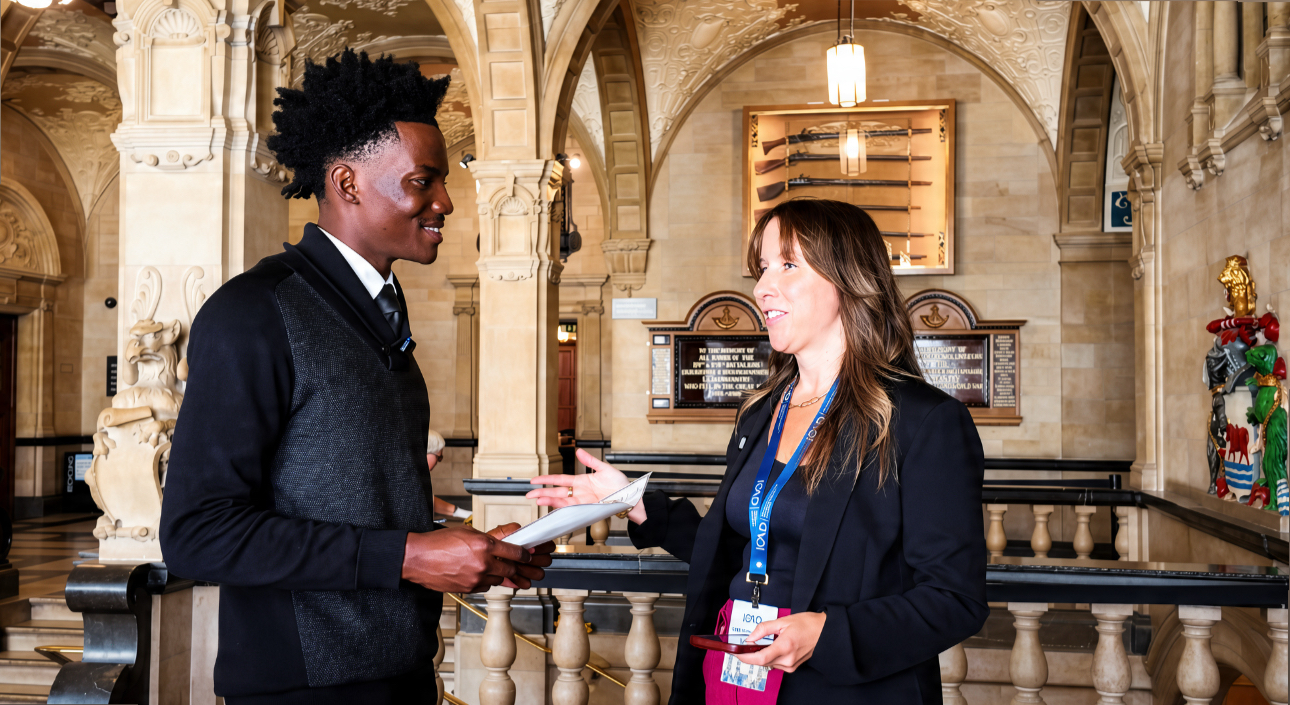
Five conversations examining what shapes the transition from education into employment.
Education and employment are often discussed as two separate systems. The transition between them is not.
Schools, training providers, universities, employers, policymakers and individuals all influence whether someone can move successfully into work - but they do not always see the same signals, make decisions at the same time or own the same part of the response.
Systems Behind the Pathway is an Apprentis interview series exploring the people, decisions and systems behind that transition.
Rather than beginning with a predetermined answer, each conversation examines a different part of the pathway - what works, what breaks down, what information matters and where responsibility sits.
Published Conversations
Coming Next in the Series
Dr Gavin Lind
Coming SoonWhat if workforce readiness begins long before a job is advertised?
Lauren Conceicao
Coming SoonIf multiple institutions shape someone's transition into work, where does responsibility actually sit?
Taikein Cooper
Coming SoonKnowing a pathway exists does not mean someone can enter it.
Series Synthesis
Five conversations revealed different parts of the same system. Competency. Workforce demand. Institutional responsibility. Access. Learning. Progression.
The synthesis brings those perspectives together around a harder question: when a readiness gap becomes visible, who can see it, who can act, and who owns the response?
Published after the five conversations have been considered individually, this essay examines the patterns, tensions and unanswered questions emerging across the series.
Coming Soon - Read the synthesis once all five conversations are publishedResearch Framework
What we have learned about the space between education and employment
Systems Behind the Pathway forms one part of a wider Apprentis research programme investigating the space between education and employment. The Apprentis Thesis brings that inquiry together: the problem Apprentis began with, the evidence gathered so far, the emerging concept of Workforce Readiness Intelligence, and the questions that remain open.
It is not presented as a settled theory. It is a working account of what Apprentis currently knows, what it thinks the evidence may suggest, and what still needs to be tested.
Coming Soon