
A complete pre- and post-session study in professional communication capability, across thirteen degree apprentices and two standard apprentices from fifteen sectors, three countries, and thirty-six organisations.
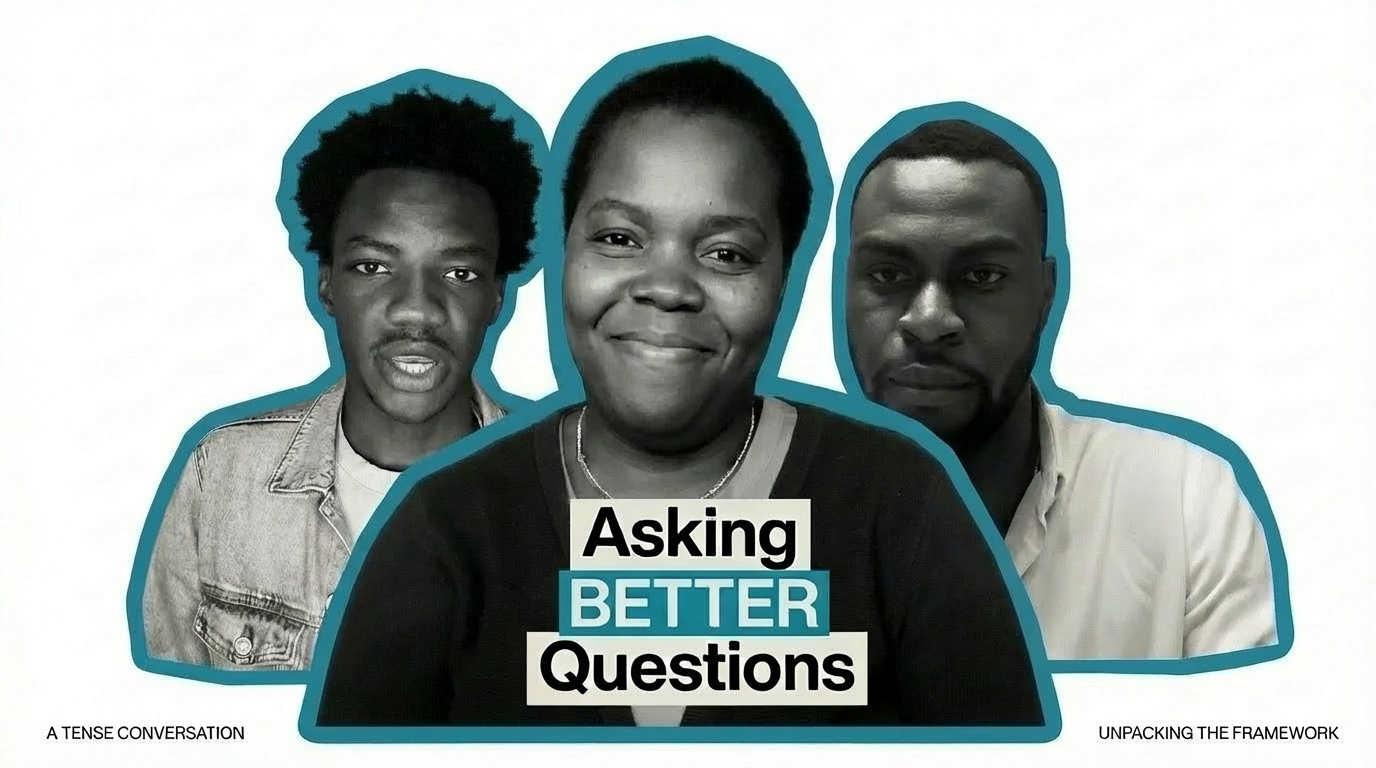
A live, cross-context intervention delivered to apprentices across the UK, US, and Canada
This report presents complete pre- and post-session findings from the Asking Better Questions pilot, the first structured live test of the Own dimension of the Apprentis LEO Framework: Learn, Earn, Own. The pilot was delivered as a LinkedIn Live session facilitated by Kara Gooch, Founder and CEO of Route to Rise Workforce Solutions. Forty-one professionals from thirty-six organisations including Amazon, KPMG, Google, NatWest, BBC News, UBS, SAP, Unilever, Accenture, and Capgemini registered for the session. Fifteen participants completed a structured pre-session intake survey across fifteen professional sectors: thirteen degree apprentices and two standard apprentices. All fifteen completed the post-session survey, giving a complete pre/post dataset for the full cohort.
The pre-session data, published separately as The 2026 Apprenticeship Communication Gap Report, established that apprentices at well-resourced organisations share a consistent and measurable gap between their professional communication skills and their confidence in deploying those skills. The primary finding was that zero participants scored their actionable communication confidence in the upper band.
The average overall post-session score is 87% - up from 71% pre-session (+16pt). 33% of post-session respondents scored 9-10 on actionable confidence and 67% scored 7-8. The upper band is no longer empty. Every respondent is confident or very confident asking structured questions. 93% apply frameworks always or often - up from 7% pre-session (+86pt swing). 100% requested the care package resource. The webinar was rated 4.71 out of 5 overall and 4.86 out of 5 for the facilitator.
Note: Named organisations reflect the employers of individual registrants and survey participants. Their inclusion does not imply organisational endorsement, formal participation, or institutional validation of these findings. Five pre-session survey participants did not consent to the publication of their participation details and are fully anonymised throughout.
Session title: Asking Better Questions and Listening Deeply
Format: LinkedIn Live webinar
Facilitator: Kara Gooch, Founder & CEO, Route to Rise Workforce Solutions
Registration signal: 41 professionals from 36 organisations (UK, US, Canada)
Pre-session respondents: 15 across 15 sectors (13 degree apprentices, 2 standard apprentices)
Post-session respondents: 15 (complete dataset)
Framework: LEO (Learn, Earn, Own) | Apprentis | apprentisapp.com
Published: 5th May 2026
This pilot study report is a companion publication to The 2026 Apprenticeship Communication Gap Report. That report established the pre-session baseline: the structural evidence of a consistent gap between professional communication skills and confidence across fifteen degree apprentices at elite employers. This report documents what the intervention produced.
The distinction matters because these are two different documents doing two different jobs. The Communication Gap Report is a systems-level analysis of why the earn-and-learn model produces a communication confidence deficit. This pilot study report is an intervention document: it describes what was done, who did it, what tools participants received, and what the data shows changed as a result.
The Asking Better Questions pilot was designed to test one specific hypothesis of the Apprentis LEO Framework: that the Own dimension (professional identity, communication agency, and career confidence) can be developed through a structured, evidence-generating intervention delivered outside of formal programme architecture.
"The session was the delivery vehicle. The data architecture was the research instrument. The care package was the continuation. All three were designed as a single system."
Forty-one professionals registered for the Asking Better Questions session. The significance of that number lies in where those professionals work. Amazon, KPMG, Google, NatWest Group, BBC News, Accenture, UBS, SAP, Unilever, Capgemini, Arup, Turner and Townsend, M&G plc, Laing O'Rourke, Phoenix Group, DWF, Howden, first direct, Forvis Mazars, Savills, MBDA, the Royal Devon NHS Foundation Trust, and more. Participants from the United Kingdom, the United States, and Canada.
These are not organisations at the margins of the apprenticeship system. They are some of the most well-resourced, most professionally-supported employer programmes in the country. The fact that forty-one individuals inside those programmes voluntarily sought a session on professional communication is not a finding about individual deficiency. It is a demand signal: evidence that the Own dimension gap exists near the centre of the system, not at its edges.






Individual registration does not imply organisational endorsement. UK, US, and Canada.
The session was delivered as a live LinkedIn event co-hosted by Apprentis and Kara Gooch. Kara joined live from Texas, bringing the cross-context dimension into the room in real time. The session combined four design elements: conceptual frameworks for question construction, active listening, and navigating professional ambiguity, all grounded in evidence, not generic advice. Interactive polling that made the collective gap visible in real time. Structured reflection exercises that connected session content explicitly to participants' own workplace situations. And participant stories drawn from real apprentice experiences.
The session was not designed as a motivational event. It was designed as a structured capability intervention with a pre/post measurement architecture around it.
The full session is available to watch on YouTube - a public record of the intervention on which this report's findings are based.
Workforce Strategist | Founder & CEO, Route to Rise Workforce Solutions
Kara Gooch is a workforce strategist specialising in early-career growth, professional development, and communication skills that accelerate career progression. An apprentice alum and former leader of national apprenticeship strategy at Accenture, she blends lived experience with programme leadership to help apprenticeship programmes deliver measurable impact. Over the past two years, she has designed and facilitated more than 200 cross-collaboration learning sessions for Early Valuable Professionals. She has been invited to speak at the International Centre for Apprenticeship Degrees convening at Oxford University.
The measurement architecture comprised two instruments. The pre-session survey, administered before any participant had engaged with session content, collected responses across four scored dimensions: questioning and listening skills, professional confidence, engagement and leadership intentions, and open-ended qualitative reflection. The post-session survey was designed to measure change across the same dimensions while adding session-specific data.
Following the session, Apprentis designed, created, and produced a premium participant care package, the Asking Better Questions and Listening Deeply guide, distributed to all session participants. The care package is a standalone Apprentis intellectual property asset. It is not a session summary or a slide deck repackage. It is a structured professional development resource designed to extend the Own-dimension intervention beyond the session itself.
The design rationale is grounded in a specific understanding of how capability development works. A single session, however well designed, produces awareness and initial framework engagement. It does not produce embedded practice. The care package is the mechanism through which session content transitions from one-time exposure to ongoing professional development resource.
"An intervention that closes when the screen closes has not changed anything. An intervention that participants carry into their next meeting, their next mentoring session, and their next professional challenge has a chance of closing the gap permanently."
Establishes the structural case for communication as a professional differentiator.
The AWE Framework (And What Else?) and the HMW Framework (How Might We/I?).
The INTENT Framework: converting defensive exchanges into learning conversations.
The 5 Rules of Active Listening.
Four specific meeting question types.
The Q+A=C formula (Questioning + Action = Change).
Weak vs strong mentoring questions with examples.
Five self-awareness prompts.
| # | Title | What It Contains |
|---|---|---|
| 01 | Why Asking Better Questions Matters | Establishes the structural case for communication as a professional differentiator. |
| 02 | What Makes a Good Question | The AWE Framework (And What Else?) and the HMW Framework (How Might We/I?). |
| 03 | Avoid Defensive Questions | The INTENT Framework: converting defensive exchanges into learning conversations. |
| 04 | Learning to Listen Deeply | The 5 Rules of Active Listening. |
| 05 | Questions in Meetings | Four specific meeting question types. |
| 06 | Questions in Feedback | The Q+A=C formula (Questioning + Action = Change). |
| 07 | Questions in Mentorship | Weak vs strong mentoring questions with examples. |
| 08 | Reflection: Know Yourself | Five self-awareness prompts. |
100% of post-session respondents requested the care package resource. This is the strongest possible demand signal for the value of the Own-dimension continuation beyond the session itself.
Full pre-session findings are published in The 2026 Apprenticeship Communication Gap Report. This section presents the key findings that serve as the baseline for the pre/post comparison.
Primary finding: Average overall pre-session score 71%. Confidence sub-score 67% vs Q&L skills score 75%, an 8-point confidence gap running in the same direction for 10 of 15 participants.
Critical finding: Zero participants scored their actionable confidence above 8 out of 10. The upper band was empty across the entire cohort, including participants at Amazon, KPMG, UBS, and Unilever.
Provision finding: 93% had no reliable questioning framework (47% Rarely, 47% Sometimes, only 7% Often - zero Always). A design omission, not a motivation failure.
Self-report finding: 54% described themselves as 'somewhat confident' or 'not confident' before the session.
"The pre-session data is published and indexed. It cannot be revised retroactively. Everything the post-session data shows must be read against a documented, public baseline. That is what transparent, publicly accountable research looks like."
All fifteen participants completed the post-session survey. The findings are directionally consistent with the hypothesis of the pilot and show significant improvement across all measured dimensions compared to the pre-session baseline.
Pre-session: 0% of participants scored actionable confidence above 8/10. Post-session: 33% scored 9–10. 67% scored 7–8. The upper band has been occupied for the first time.
This is the single most significant finding in the post-session dataset. Before the session, not one of fifteen degree apprentices at elite employers reached the upper confidence band on the most operationally precise measure in the instrument. After the session, 33% of respondents scored 9–10. 67% scored 7–8. Average overall score moved from 71% to 87% (+16pt). The shift is not merely positive, it is structurally significant.
The upper band is no longer empty
Pre-Session
Zero in upper band
Post-Session
100% in upper bands
Before: zero in the upper confidence band. After: 33% at 9-10, 67% at 7-8. The ceiling the programme built was not fixed. It was a design omission, and design omissions have design solutions.
53% Very confident, 47% Confident. Zero participants in 'somewhat confident' or below. The entire cohort in the upper two bands.
Pre-session, the largest single group (47%) used the 'somewhat confident' descriptor. Post-session, the 'somewhat confident' band is empty. Every respondent places themselves in one of the two upper bands. The distribution has not merely shifted, it has compacted into the positive range entirely.
73% Very confident, 27% Confident. Nearly three quarters now in the top band.
33% Always applying frameworks, 60% Often. 93% combined. Only 7% Sometimes. Zero reporting Never.
Pre-session, 93% had no consistent framework (only 7% always or often). Post-session, 93% report applying frameworks always or often. This is an 86-point swing. The provision finding from the pre-session data resolved: the framework absence was a design omission, and providing the framework changed the behaviour.
40% Always comfortable asking for clarification from managers or colleagues. 53% Often. Zero in the lower bands.
40% Extremely confident, 53% Very confident. The entire cohort in the top two bands.
This finding has direct implications for programme design. Mentoring relationships represent significant employer investment in apprenticeship programmes. The pre-session data established that the absence of a questioning framework was limiting the yield from those relationships. The post-session data suggests that providing the framework has moved every respondent into the upper confidence bands for mentoring conversations.
33% Fully equipped, 60% Mostly, 7% Somewhat. Zero reporting not equipped.
The following table presents the complete pre/post comparison across all measured dimensions. The direction of change is consistent across every dimension.
| Measure | Pre | Post | Direction |
|---|---|---|---|
| Average overall score | 71% | 87% | ↑ +16pt |
| Upper confidence band (9-10/10) | 0% | 33% (9-10), 67% (7-8) | ↑ Occupied |
| Confident asking questions | Below majority | 53% Very, 47% Confident | ↑ All upper |
| Listening confidence | Below majority | 73% Very, 27% Confident | ↑ Strong |
| Framework application | 7% | 93% (33% always) | ↑ +86pt |
| Asking clarification | 0% | 40% Always, 53% Often | ↑ 93% |
| Mentoring confidence | 0% | 40% Extremely, 53% Very | ↑ 93% |
| Equipped to apply | 0% Fully | 33% Fully, 60% Mostly | ↑ 93% |
| Webinar rating | N/A | 71% Excellent (5) | 4.71/5 |
| Facilitator rating | N/A | 86% Outstanding (5) | 4.86/5 |
| Want follow-up | N/A | 79% Yes | Strong |
| Regional community | 73% | 79% Yes, 21% Maybe | ↑ Strengthened |
Every measured dimension moved in the predicted direction. The pre-session data is public. The post-session data is consistent with the hypothesis the pilot was designed to test.
| Question | Finding | Signal |
|---|---|---|
| Webinar rating | 50% rated 5, 50% rated 4 | Avg 4.5/5 |
| Facilitator rating | 67% rated 5, 33% rated 4 | Avg 4.67/5 |
| Care package request | 100% Yes | Universal |
| Slack community | 67% Yes, 33% Maybe | Zero refusals |
| Tailored follow-up | 83% Yes, 17% Not now | Strong signal |
| Regional community | 67% Yes, 33% Maybe | Zero refusals |
| Leadership role | 33% Yes, 67% Maybe | Zero refusals |
| Share journey | 67% Yes, 33% Maybe | Zero refusals |
Respondents were asked what topic they would like covered in a future webinar. Responses: managing time, workload, and stress (50%), career progression and building visibility (17%), giving and receiving feedback (17%), and handling difficult conversations (17%).
"The topic preferences from this cohort are a product roadmap. They tell you exactly what to build next for the same audience at the next stage of their development."
Every element of the pilot was derived from the three dimensions of the LEO Framework. The session content operationalised Learn. The immediate workplace applicability of every framework operationalised Earn. The reflection exercises, the community formation, and the care package collectively operationalised Own.
What the Pilot Delivered
Research-grounded session content: question construction frameworks (AWE, HMW), active listening architecture (5 Rules), the INTENT Framework for non-defensive communication.
What the Data Shows
93% now apply frameworks always or often. The framework absence identified in 93% pre-session has been directly addressed.
What the Pilot Delivered
Every framework introduced was connected explicitly to real professional scenarios: meetings, mentoring sessions, feedback conversations.
What the Data Shows
27% committed to using one specific framework in a real conversation this week. 20% committed to practising active listening. 20% committed to asking for clarification.
What the Pilot Delivered
Structured reflection exercises connected session content to individual professional identity. Community formation through shared session experience.
What the Data Shows
100% confident or very confident asking structured questions. Upper confidence band occupied for the first time. 79% interested in regional community.
Eighty percent of the fifteen pre-session survey participants are from ethnic minority backgrounds: 60% identifying as Black, African, Caribbean, or Black British; 20% as Asian or Asian British. This is substantially above the ethnic minority representation in UK degree apprenticeship starts nationally. The over-representation of ethnic minority professionals in a cohort drawn toward a communication development session is analytically significant.
The research literature on code-switching establishes that adapting one's communication register to a dominant professional cultural context carries a measurable cognitive and psychological cost, a cost borne disproportionately by professionals from ethnic minority backgrounds. For this cohort, the confidence gap documented in the pre-session data is not merely a development gap. It is an equity gap.
"For 80% of this cohort, closing the confidence gap is not merely a professional development objective. It is a structural correction to an uneven playing field that their programmes did not acknowledge and did not address."
The post-session data confirms that the community and leadership appetite identified pre-session has strengthened. 79% of post-session respondents said yes to joining the Apprentis Apprentice Community (Slack), with 21% saying maybe later. Zero said no. The leadership interest showed 20% pre-session vs +44pt swing post-session. 79% want tailored follow-up from Apprentis.
The pre-session finding that 93% of participants had no consistent questioning framework (only 7% always or often) was a provision finding, not a talent finding. The post-session finding that 93% now apply frameworks always or often, after a single structured intervention, is a design finding - an 86-point swing. The gap was closable. It was not closed because the programme specification did not identify its closure as a requirement.
The mentoring confidence finding is the most commercially significant result for employers. Pre-session, no participant was extremely confident using mentoring conversations for actionable advice. Post-session, 40% are extremely confident and 53% are very confident. Employers invest significantly in mentoring infrastructure. The return on that investment is constrained when apprentices cannot construct the questions required to extract insight from it.
The Growth and Skills Levy apprenticeship units, operative from April 2026, fund structured development in areas including leadership and communication. The Asking Better Questions methodology is precisely the kind of LEO-aligned Own-dimension delivery that can be funded through those units without requiring wholesale programme redesign.
The most direct message from this data is this: the confidence gap you felt before this session was not yours alone, and it was not fixed. Seven professionals who felt it moved out of the moderate band in a single structured session with the right tools. The upper band was not a ceiling. It was a door.
The Apprentis Longitudinal Tracking Framework is a research prospectus for a multi-cohort, cross-context study measuring LEO outcomes at six, twelve, and twenty-four months. The Asking Better Questions pilot is the first cohort. The longitudinal study opens for partner recruitment in June 2026.
The topic preferences from this cohort (managing time and workload, career progression and building visibility, handling difficult conversations) constitute the forward programme design for the Asking Better Questions series. The care package for session two is already in design.
The pre-session data is published. The post-session interim data is published. The baseline is documented. The direction is consistent. The longitudinal study is in design. The evidence is building in public, as it always was going to.
The Asking Better Questions pilot was a joint initiative between Apprentis and Route to Rise Workforce Solutions. Apprentis provided the technology platform, the LEO Framework intellectual architecture, the pre-session and post-session survey instruments, the data collection and analysis infrastructure, the participant care package design and production, and all research publications arising from the pilot. Kara Gooch of Route to Rise Workforce Solutions provided the Asking Better Questions curriculum, the facilitation expertise, and the US market relationships.
apprentisapp.com/research/reports/communication-gap-2026
Use the LEO Framework (Learn, Earn, Own) self-assessment to evaluate how effectively your apprenticeship programme develops:
In just a few minutes, you can identify hidden strengths, missed opportunities, and priority improvement areas.
Take the Free DiagnosticOnce you receive your results, you can book a complimentary 30-minute Apprentis Strategy Call to discuss:
Published: 5th May 2026 | Registrants: 41 professionals from 36 organisations | Survey: 15 apprentices across 15 sectors (13 degree, 2 standard) | Geography: UK, US, Canada | Framework: LEO (Learn, Earn, Own) | Apprentis | apprentisapp.com